
How Elite Coaches Make Decisions
How to maximize individual development and team performance
Hi there,
You don’t have to choose between development and winning - you can have both.
How Elite Coaches Decide Under Pressure
Coaches make decisions under time pressure and public scrutiny, in an environment where the outcome affects winning, losing, and job security. We take this for granted. Imagine sitting at your desk, having to make a split-second decision that affects your company’s success, with hundreds or thousands of people watching it play out. Get it wrong, and you could lose your job.
Drawing on interviews with 11 elite coaches across the NFL, NBA, MLB, top European football and rugby, and the NRL, a new HBR piece breaks high-pressure decision-making into three phases: before, during, and after. Here’s what stood out.
Source: Alan McCall, Adrian Wolfberg, Johann Bilsborough, and Ricard Pruna, “How Elite Sports Coaches Make High-Pressure Decisions,” Harvard Business Review (forthcoming July–August 2026).
Before
Preparing your players and staff for the moments that decide a game is great coaching. Top coaches don’t improvise under pressure; they anticipate. They look ahead to the moments they’ll likely face and rehearse the options in advance. They test their thinking with the coaching staff, creating clarity in roles and responsibilities. One MLB manager decided his pitching matchup the night before a World Series game, including the exact trigger for a substitution, and stuck to the plan even when an in-game change tempted him to deviate. It worked.
You can practice key moments with your players too. I’ve found that training your team to approach these situations builds a mindset and teamwork that transfers to other moments.
A common scenario to prepare for is pulling your goalie to tie the game late. It would be nice if that scenario always started with your top players rested for an offensive zone faceoff. But what happens when you need to get from your own end to the other end quickly, pull your goalie, and get the right players on the ice? You can’t figure that out in the moment. You need to rehearse the plan with your staff, teach it to the players, and practice it in conditions as close to game-like as possible.
During
In the moment, the work is regulating emotion and focusing on what needs to be done now to give your team an edge. It’s easy to spiral into “what ifs” about outcomes or outside reaction.
Great coaches read the room continuously, scanning for body language, tone, and shifts in energy. What looks like gut instinct from the outside is usually pattern recognition built from repetition, and from knowing your players and the spirit of the team.
But before a coach can monitor their team’s energy and focus, they need to be clear-minded themselves. When you’re prepared and mentally ready, you’re more likely to notice the adjustments your team needs.
After
The best coaches treat the aftermath as its own discipline. They’re ruthless with their review, especially of their own decisions.
After Canada’s 2-1 World Cup defeat to Switzerland, coach Jesse Marsch was unusually candid in his post-game comments, acknowledging that switching to a five-back formation at halftime to shut the game down was the one adjustment he’d make differently in hindsight.
Below is a full-length press conference that shows him extending that same honesty across several other topics. I’d love to see what his private post-match evaluation process actually looks like.
A note on resulting…
“Resulting” is a bias that judges the quality of a decision by its outcome. A good result is assumed to mean a good decision, a bad result a bad one. In sport, you can make a good decision and get a poor result, and vice versa.
The framework below offers a way to evaluate your decisions that strips out this bias, giving you a more accurate read on the calls you actually made.
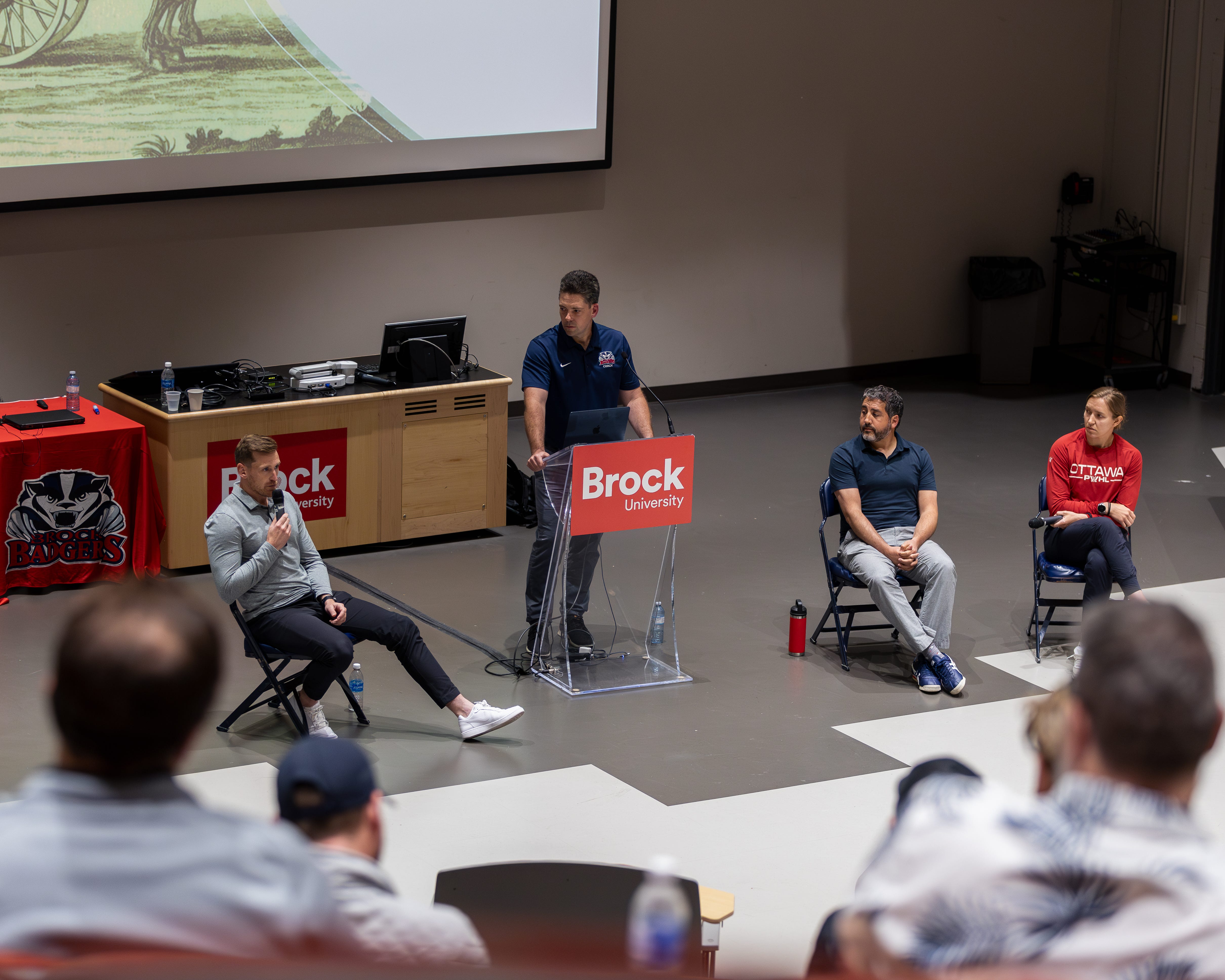
Brock Badgers High Performance Hockey Seminar
Purchase the video of all presentations from the 2023, 2024, 2025, or 2026 seminar for just $74 (CDN). Email me directly at tmanastersky@brocku.ca for details.
Click here for the 2023, 2024, 2025, 2026 agenda including speakers and topics.
About the Seminar
Learn, share, and connect with coaches, scouts, managers, students and industry professionals from all ages, genders, and levels on the campus of Brock University in the beautiful Niagara region.
Cheers,
TJ Manastersky
Coaching Project
Follow the Coaching Project on Twitter here
If you are new to the Coaching Project newsletter, you can find the past editions here.
I’m convinced many of us evaluate our coaching the way the scoreboard does, and it trains us to defend whatever worked instead of examining what we actually decided. The coaches I’ve been around who keep getting better are the ones who can win and still admit the call was wrong. That’s a harder standard than winning, and it’s the one that builds judgment.
Every coach has the opportunity to define the culture based on their set of values & beliefs, standards & expectations of play and behaviours. Evaluates team performance based on execution, not outcomes which they don’t control. Character drives performance and players are always watching and observing their coaches.
“You are what you do, not what you say you’ll do” Carl Jung